
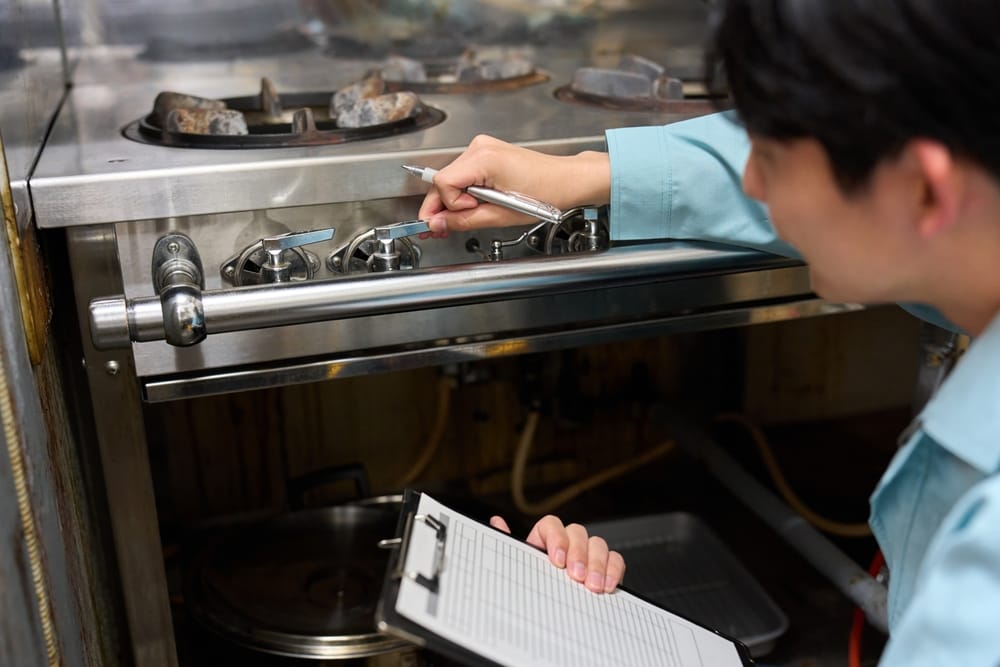
An oven that takes too long to heat, struggles to maintain its temperature, or stays completely cold can disrupt everyday cooking. Although some heating problems result from simple settings issues, others point to worn components or electrical faults.
Understanding the possible causes can help homeowners decide when basic troubleshooting is enough and when professional assistance is necessary.
1. Check the Oven Settings and Power Supply
Before assuming a component has failed, check the selected cooking mode and temperature. Some modern ovens will not start if the clock is not set correctly or a control lock is active.
For electric models, inspect the circuit breaker for a tripped switch. An interrupted power supply can prevent the oven from heating even when its display and controls appear functional. If the breaker trips repeatedly, contact a qualified technician rather than continuing to reset it.
2. Inspect the Heating Element
Electric ovens use heating elements to produce the temperatures needed for baking and roasting. Over time, these components can burn out or develop damaged sections.
Look for visible blisters, cracks, or unusual marks on the bake element. If it does not heat properly, the oven may take longer to preheat or produce uneven results. A damaged element usually requires replacement to restore normal operation.
3. Look for Gas Oven Igniter Problems
Gas ovens rely on an igniter to activate the burner. A weak or defective igniter may glow without becoming hot enough to open the gas safety valve. As a result, the burner may never ignite.
If the oven clicks repeatedly, fails to produce heat, or takes unusually long to start, the igniter could be responsible. Gas-related repairs should always be handled by a qualified professional. If you smell gas, turn off the appliance if safe, avoid operating electrical switches, leave the area, and contact your gas utility or emergency service.
4. Consider a Faulty Temperature Sensor
An oven temperature sensor monitors internal heat and communicates with the control system. If it provides inaccurate readings, the oven may stop heating too early, overheat, or struggle to reach the selected temperature.
Using an oven thermometer can help identify temperature inconsistencies. However, persistent problems may require professional testing and sensor replacement.
5. When Should You Call an Appliance Repair Technician?
Basic checks can resolve some oven problems, but electrical faults, damaged heating components, defective control boards, and gas ignition issues require proper diagnosis.
Professional stove repair in Winnipeg can help identify the underlying problem instead of replacing parts unnecessarily. If several kitchen appliances are also experiencing problems, a technician providing winnipeg appliance repair may help assess their condition and recommend suitable repairs.
Get Your Oven Heating Properly Again with DSL Appliances Repair
Do not let an unreliable oven interrupt your daily routine. DSL Appliances Repair can help diagnose appliance problems and identify appropriate repair solutions. Whether your oven is heating unevenly, taking too long to preheat, or refusing to turn on, professional attention can help get your kitchen back on track. Visit DSL Appliances Repair to learn more about available repair services.